Revealing Architectural Design
Architectural pedagogy has historically divided into two opposing camps: the Designer-Artist, who fears methodology undermines intuition, and the Designer-Scientist, who seeks a rigid, repeatable formula. Revealing Architectural Design rejects this binary. It argues that successful design relies on frameworks—meta-organizational structures that guide thinking without dictating outcomes.
This text rejects the "black box" myth of architectural creativity. It argues that design is a knowledge-based discipline that relies on explicit frameworks to manage complexity. The following concepts constitute the core operational syntax of the book.
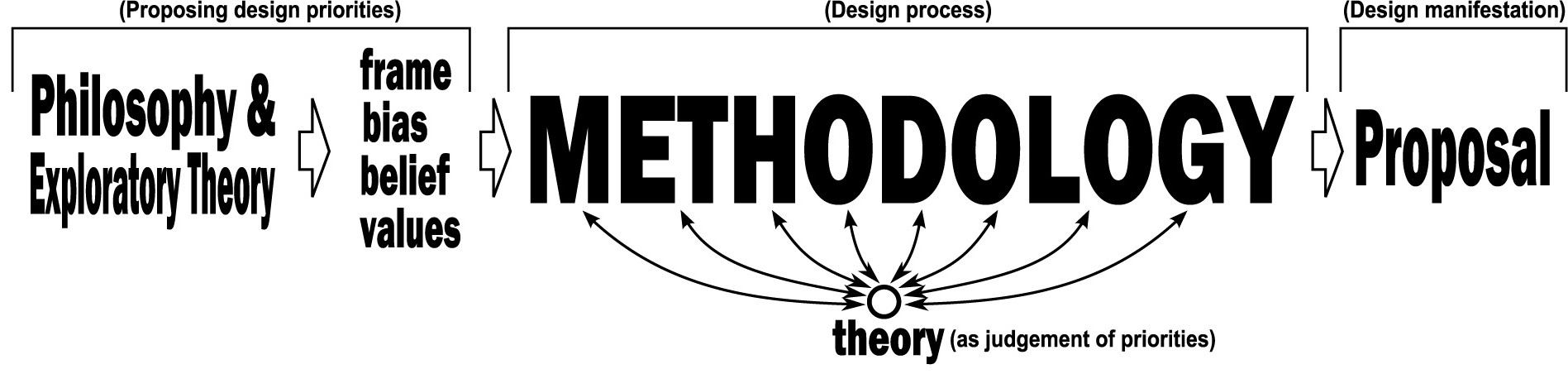
Placing theory in relation to methodology.
I. The Three Frameworks
Frameworks are meta-organizational structures. They are the scaffold for addressing content, not the content itself.
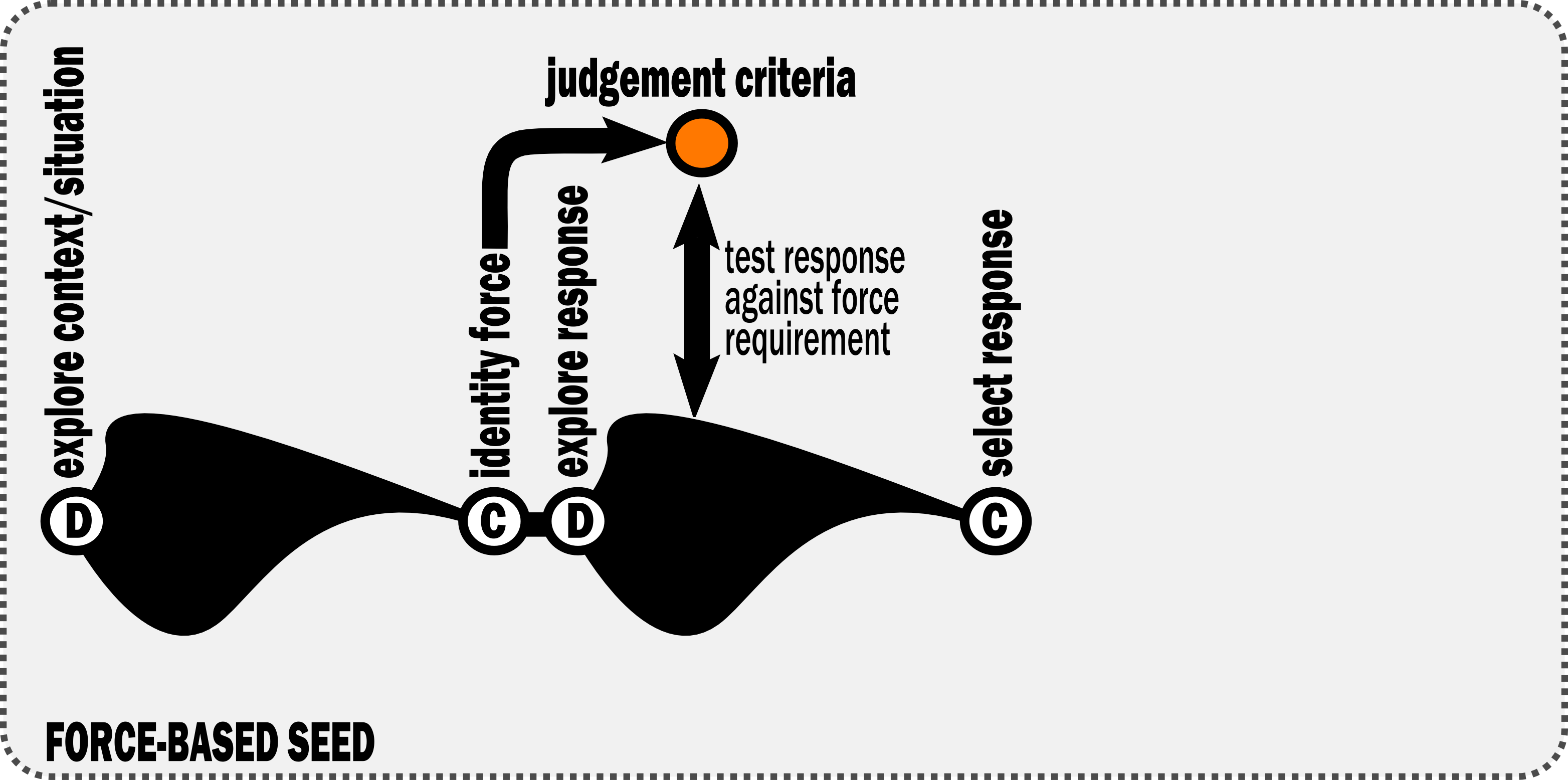
Pattern-Based
Definition: Design that begins with typological transfer. It identifies rules from existing precedents (patterns) and adapts them.
Primary Operation: Adaptation & Modification.
Bias: Cultural continuity, history, and efficiency.
Risk: Cliché (repetition without critical thought).
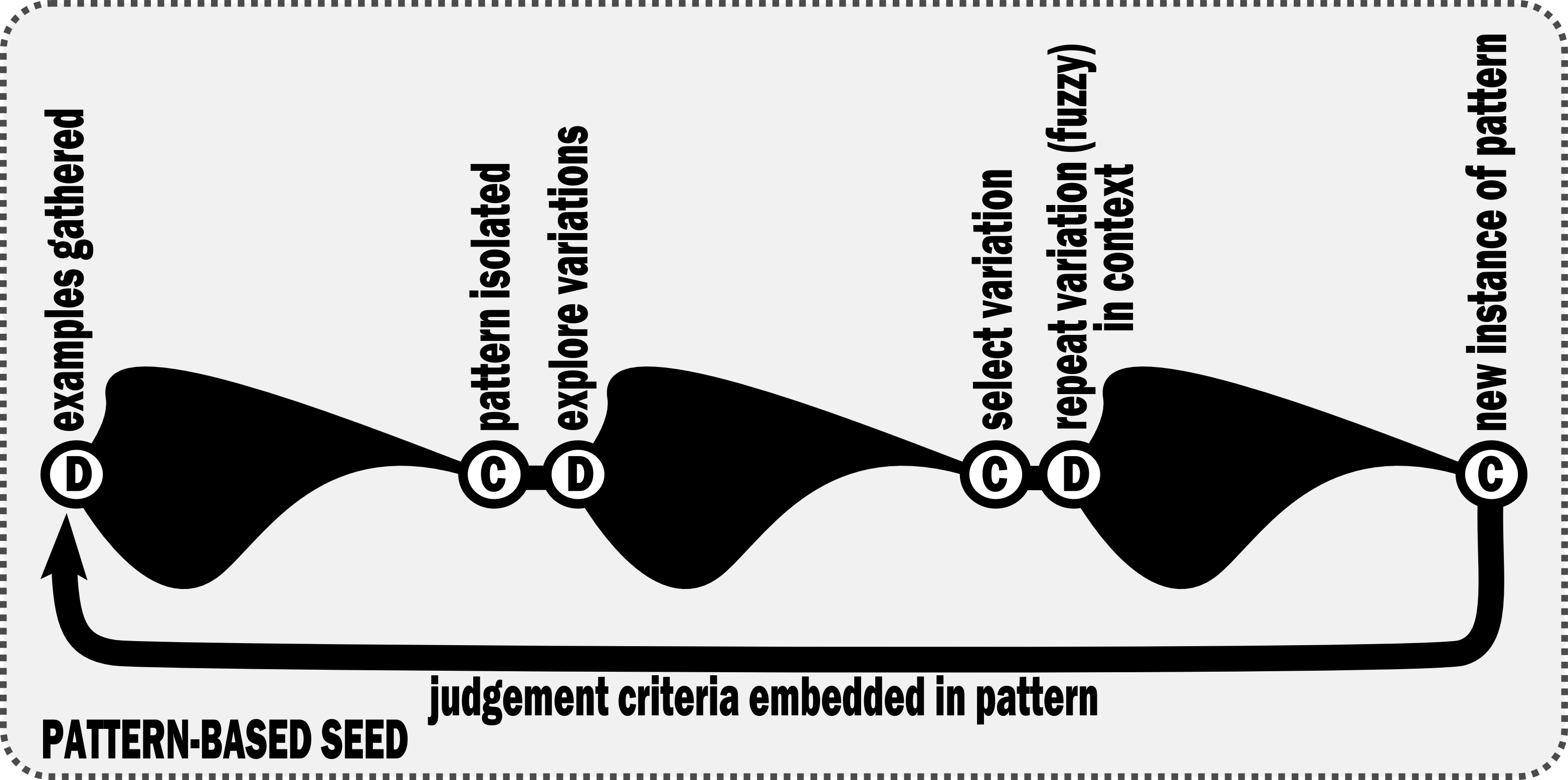
Force-Based
Definition: Design as a reaction to pressure. Form is generated by mapping external "forces" (data, site, program, time) to deform a neutral container.
Primary Operation: Mapping & Deformation.
Bias: Performance, emergence, and complexity.
Risk: Automation (loss of human intent).
Concept-Based
Definition: Design driven by an abstract idea or metaphor. The building is a physical translation of a non-physical thought.
Primary Operation: Translation (Domain-to-Domain Transfer).
Bias: Meaning, semantics, and intellectual coherence.
Risk: Irrelevance (symbolism that fails to function).
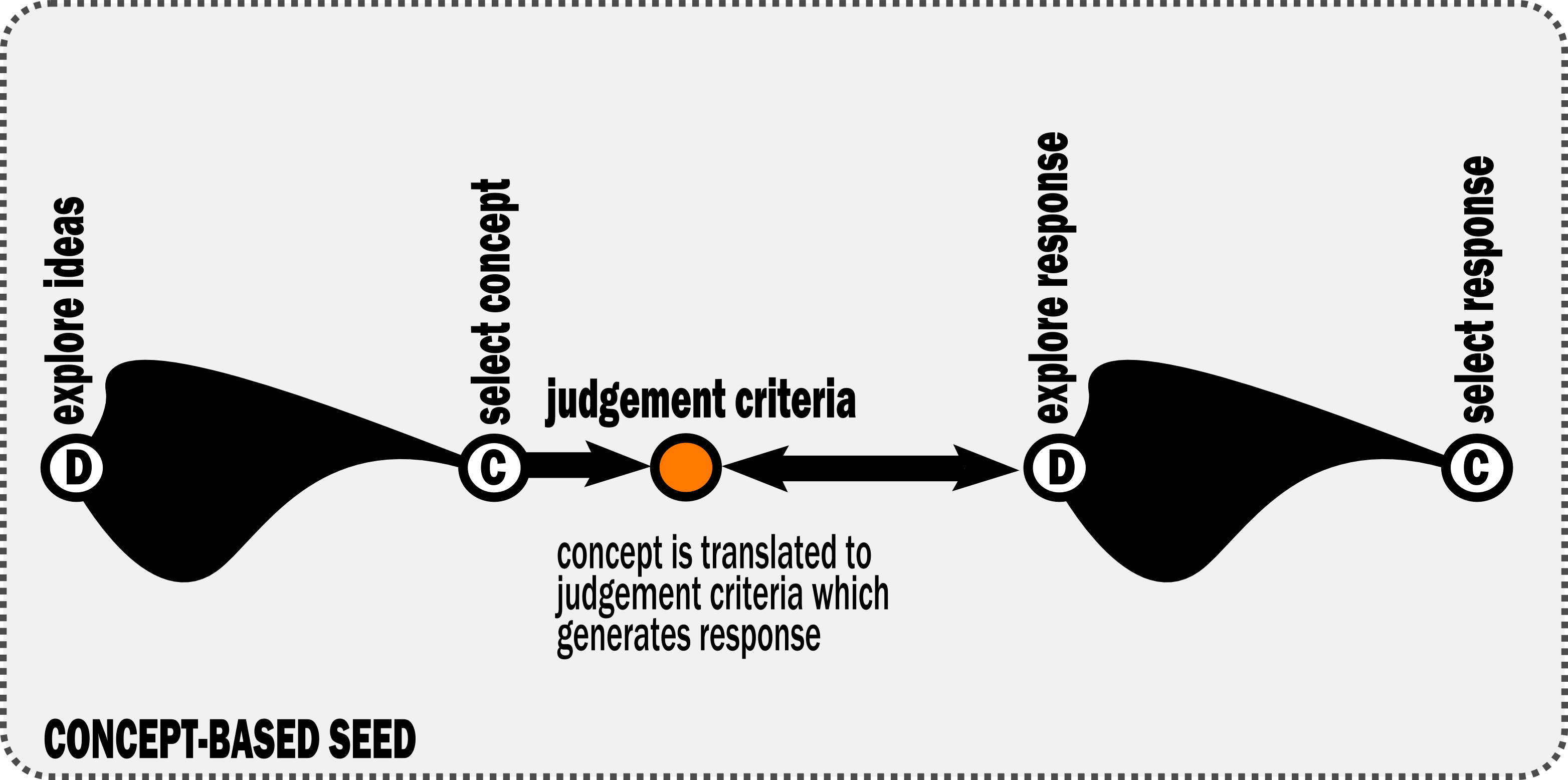
II. Cognitive Tools (How we Think)
- Divergent vs. Convergent Thinking
- Design is not a single mode of thought. It is the coupling of Divergent thinking (exploratory, displacing the expected, generating options) and Convergent thinking (evaluative, narrowing options, testing against criteria). Quality emerges from the cycle between them.
- Framing
- The cognitive act of selecting a specific perspective to limit the scope of a design problem. Since design problems are "wicked" (unsolvable in their entirety), framing allows the designer to make the problem actionable by excluding certain information.
- Heuristics
- Cognitive shortcuts or "rules of thumb" used to make decisions when information is incomplete. In architecture, heuristics replace the scientific requirement for 100% data certainty, allowing the designer to move forward.
- Domain-to-Domain Transfer
- The process of moving knowledge from a Source Domain (e.g., Biology, Music, Philosophy) to the Target Domain (Architecture). This requires translating the logic of the source into the Domain Syntax of architecture (space, material, light).
III. Design Operations (What we Do)
- The Diagram
- Distinct from a sketch or a drawing. A diagram is an abstract graphic tool that explains relationships, forces, and organizations. It ignores the visual appearance of the building to focus on its underlying logic.
- Coherence (Reinforcement)
- A measure of design quality. Coherence exists when multiple elements in a project (structure, circulation, envelope) reinforce a single conceptual objective. It is the antidote to randomness.
- Deformation
- A Force-based operation where a standard type or neutral form is physically altered by the application of site pressures or programmatic requirements.
- Versioning
- A divergent tool involving the rapid generation of multiple variations of a single idea to explore its limits before selection.