1. The Projection Mechanism
Analysis of architectural discourse reveals that we rely on radical personification to make sense of inert matter. We use the "known" (our body) to navigate and categorize the "unknown" (the environment).
This explains why our professional language is saturated with somatic metaphors:
- "The column is straining." (We project our own experience of muscular tension under load.)
- "The room creates pressure." (We project our experience of constriction or containment.)
- "The building sits." (We project a human posture of rest onto the meeting of ground and mass.)
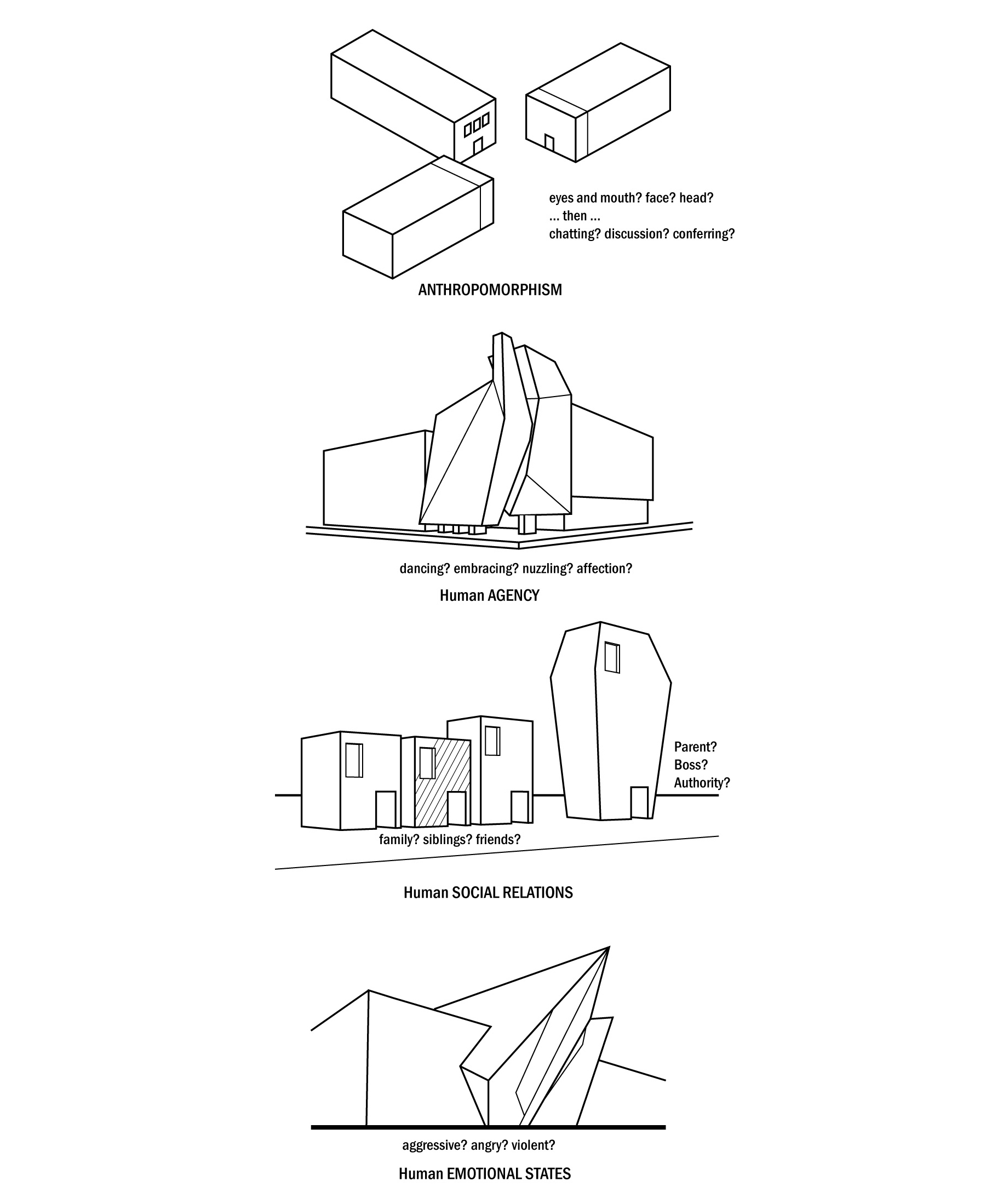 Figure 1: The categories of personification. (from Making Architecture Through Being Humans) 2020.
This mechanism is a projection of personification through correlation-based conceptual metaphors. We do not passively observe the building but we actively project our experiences into the building to make sense of its geometry.
2. Designing the Simulation
Because users inevitably project their own bodies onto the built environment, the definition of design shifts. We are not designing objects; we are designing triggers for simulation.
In Making Architecture Through Being Human, this becomes a practical methodology as we manipulate geometry to activate specific bodily memories:
- To create "safety", we mimic the bodily posture of protection and enclosure (CONTAINMENT).
- To create "dynamism", we mimic the bodily posture of imbalance or movement (BALANCE/IMPLIED MOTION).
The successful architect creates spaces that allow the user to successfully simulate the intended experience.
3. The Crisis of Simulation
The challenge in contemporary design is not the tool, but the focus of the operator.
Digital design interfaces, whether parametric software or urban data platforms, are excellent at simulating physics (wind loads, energy use) and logic (traffic flow, cost). However, they do not automatically simulate existence.
When we deploy algorithms to design our cities, we often act as "managers of data" rather than "simulators of experience." We optimize for the metric (efficiency) rather than the feeling (friction). A human-centric architecture requires the designer to consciously re-insert the body into the loop, using the digital tool to serve the simulation, not replace it.
Key References
Plowright, P. D. (2020). Making Architecture Through Being Human: A Handbook of Design Ideas. Routledge.
Plowright, P. D. (2018). Qualitative Embodiment in English Architectural Discourse: Conceptual Metaphors and the Value Judgement of Space. PhD Dissertation, Universidad de Castilla-La Mancha.
Plowright, P. D. (2014). Revealing Architectural Design: Methods, Frameworks and Tools. Routledge.