We design the built environment to stabilize these social agreements. Through the manipulation of geometry, we arrange the probability of human interaction. And the interpretation of that geometry is based on pre-conceptual image schemas. When we enter a space, we unconsciously process the CENTER-PERIPHERY schema, asking if there is a focal point that gathers attention (A hearth, a table, a node)? We also look for BLOCKAGE vs. PATH so does the geometry impede movement to create a pause, or does it accelerate flow?
"Architecture is the physical manifestation of social structure. It creates the stage upon which the scripts of our lives are acted out... controlling the interaction between people through the control of space."
— Making Architecture Through Being Human (2020)
1. The Geometry of Encounter
Social interaction begins with the orientation of the body. Architecture affords relationships by actively directing the gaze and posture of its inhabitants. In Making Architecture Through Being Human and Urban Design Made by Human, we categorize these potentials into communality (gathering) and privacy/territory (separating). These are also known as sociopetal space (gathering) and sociofugal space (separating).
- Sociopetal Space (gathering): Geometries that orient bodies toward a common center. A circular table, a cul-de-sac, a concave niche, or a campfire are convex spaces. They creates a "center of attention," increasing eye contact and the probability of conversation.
- Sociofugal Space (separating): Geometries that orient bodies away from each other or in parallel lines. A grid of airport seating, a long corridor, a linear bench, or a convex wall. These spaces reduce social friction and prioritize isolation or efficiency and individual privacy even within a crowd.
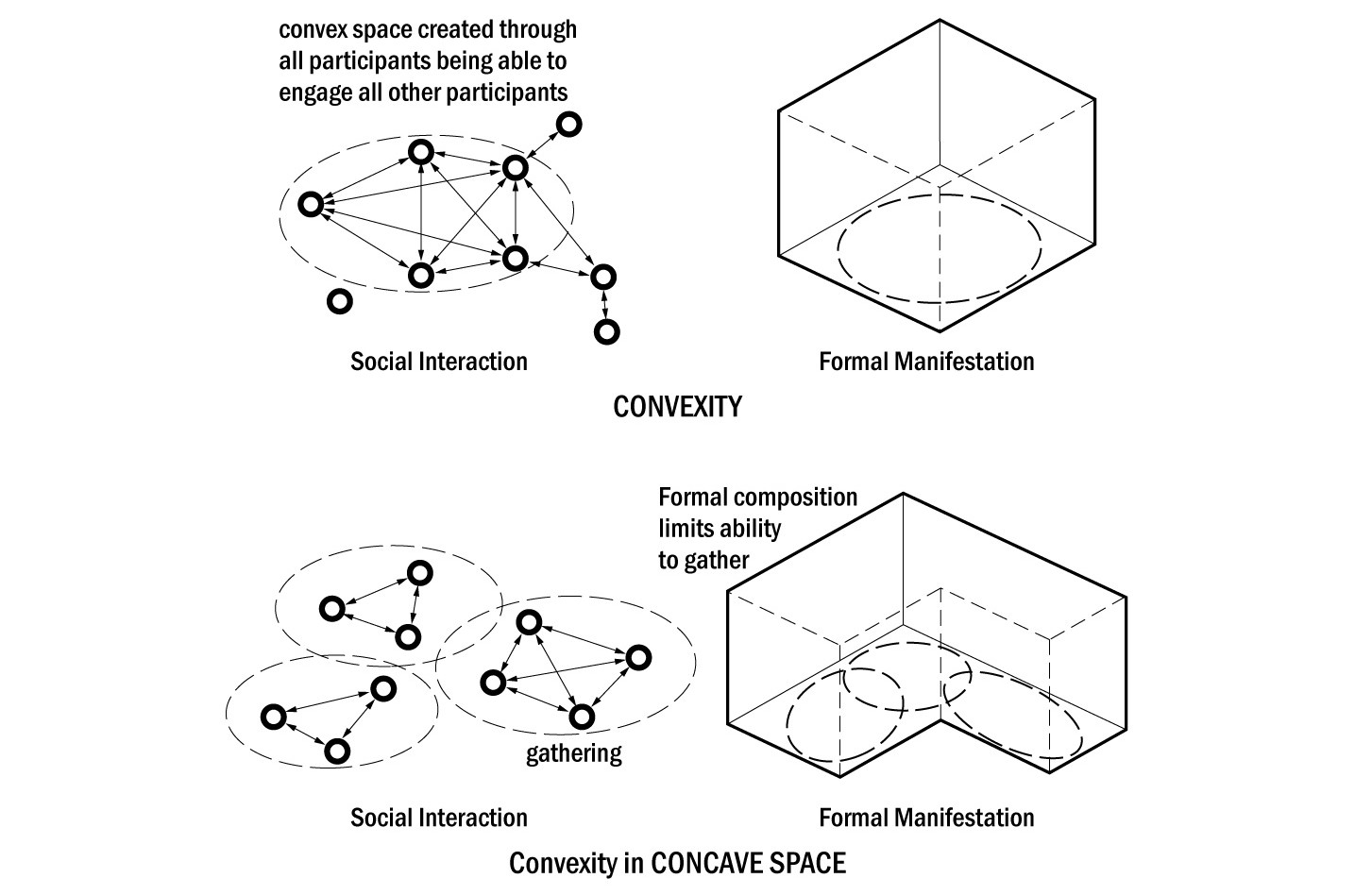 Figure 1: Spatial configuration in convex and concave space (from Making Architecture Through Being Human) 2020.
The designer’s role is to modulate these two forces, balancing between sociopetal moments to support community and sociofugal refuges to recharge and relax.
2. Visibility and Surveillance
Visibility acts as a form of power. The ability to see without being seen, or the state of being mutually visible, defines the social hierarchy of a space. Designers manipulate this through influencing what someone can see and who can see them.
We use visual access to regulate intimacy. A space with high visibility (an open plaza) compels a "public" behavior profile—we perform for the collective gaze. A space that restricts visibility (a high-backed booth) affords "private" behavior.
- Democratic visibility creates mutual sightlines for equality and safety (the "eyes on the street" effect).
- Hierarchical visibility structures one-way sightlines to create authority (the panopticon, the pulpit, the judge’s bench).
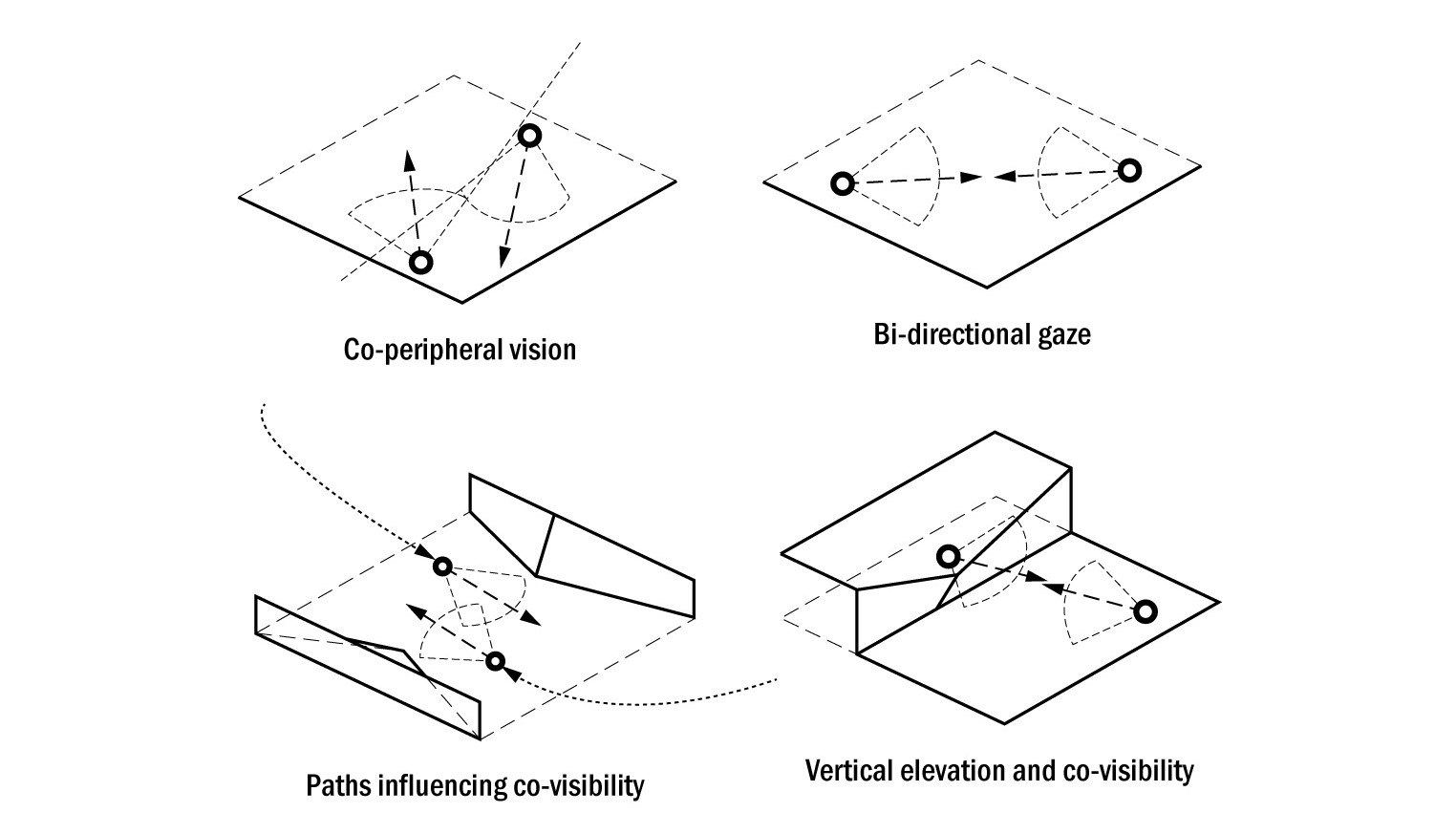 Figure 2: Co-awareness through VISIBILITY and PROXIMITY (from Urban Design Made by Humans) 2020.
3. Territory: Gradients of Control
Accessibility acts as a form of power. The ability to allow touch or proximity to our bodies, or to see without being seen defines the social hierarchy of a space. Designers manipulate this through influencing the effort to make something accessible. In this way, publicness and privacy exist as gradients of physical access, visual access, and sensory control.
We understand territory through the cognitive logic of the CONTAINER. To feel "private," a human requires a sense of enclosure and the ability to control the boundary.
- Public Territory: Defined by high accessibility and low individual control. The geometry affords free movement and anonymity.
- Semi-Private (The Threshold): The critical zone of transition. The porch, the reception desk, or the change in floor material signals a shift in rules. Here, the visitor must pause and request permission to proceed.
- Private Territory: Defined by low accessibility and high individual control. The geometry restricts entry to a select group, validating their identity and safety.
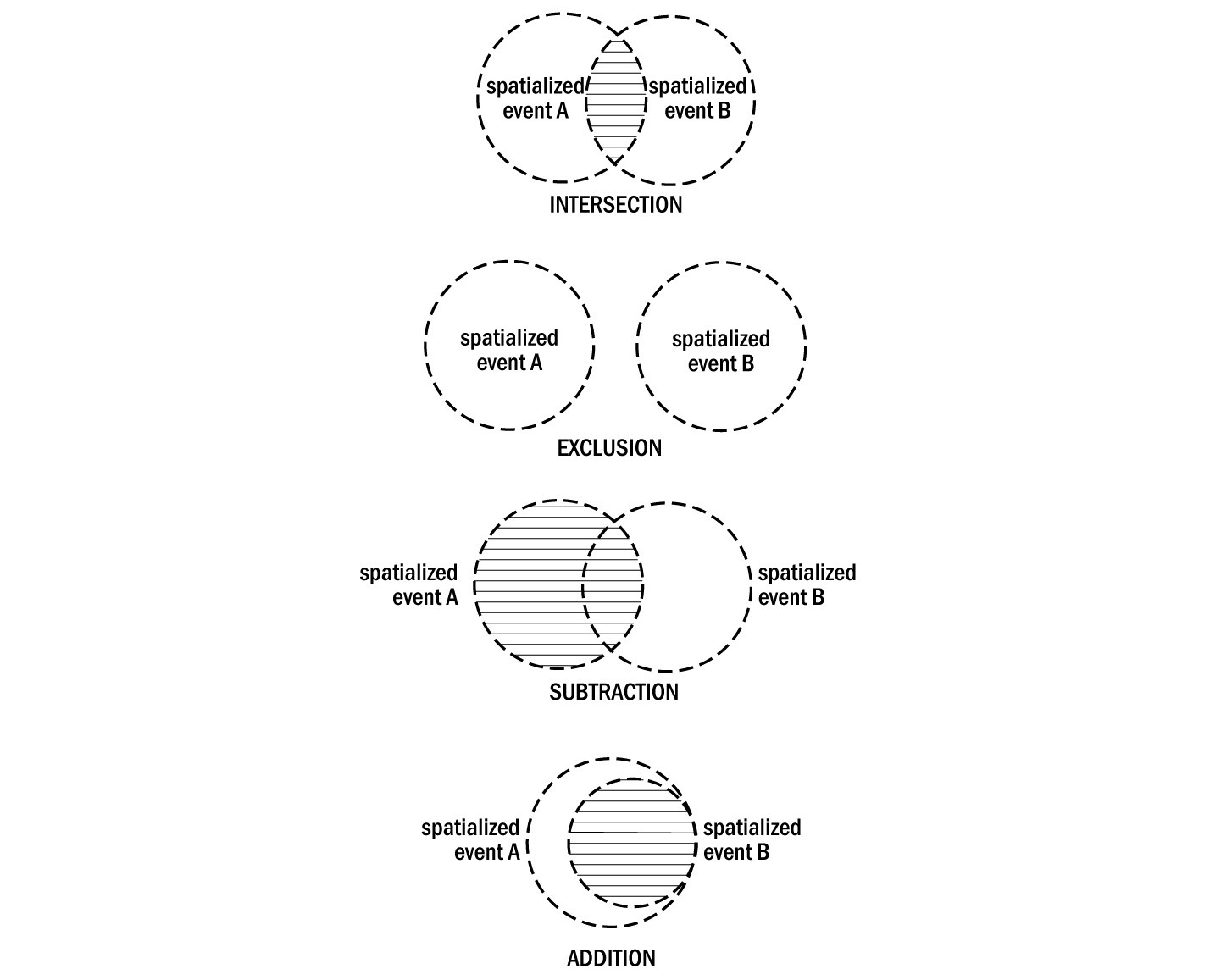 Figure 3: Containment and spatial territory (from Making Architecture Through Being Human) 2020.
4. Application: Designing the Agreement
The role of the architect is to make these invisible social contracts explicit. When we design a school, a hospital, or a home, we must ask:
- Who is the space orienting us toward? (Are we forced to look at the teacher, or at each other?).
- Where is the threshold?(Is the transition from public to private abrupt, or layered and welcoming?)/li>
- How does the geometry define the group?(Does the room signal a collective, or individuals sharing a container?)/li>
Plowright, P. D., & Carta, S. (2026). The Hidden Lives of Algorithms. Routledge.
Plowright, P. D., & Adhya, A. (2023). Urban Design Made by Humans: A Handbook of Design Ideas. Routledge.
Plowright, P. D. (2020). Making Architecture Through Being Human. Routledge.
Plowright, P. D. (2014). Revealing Architectural Design. Routledge.