Urban Design Made by Humans
The act of design is not making objects or producing drawings. Design is the thinking process behind those outcomes. This handbook extends the cognitive frameworks of Making Architecture into the urban realm, exploring how we shape our cities through massing, infrastructure, and habitation. We argue that the city is a vast assemblage of social agreements linked by infrastructure. By using the same cognitive tools we use for buildings — such as containment, porosity, and visibility — we can understand how urban form supports human behavior. This book isolates the specific design operations that transform a 'space' (a geographic quantity) into a 'place' (a social quality), focusing on how physical geometry creates the potential for public life.
I. Core Definitions
The fundamental components of the urban environment.
Massing
Infrastructure
Habitation
Embodied Thinking
II. The Assemblages
The Syntax. How simple urban concepts link together to form complex social agreements.
01. The Legibility Chain
Pattern
A type of repetition that brings regularity. We use patterns to reduce the mental stress of encountering the unknown.
Rhyme
A pattern based on similarity. When things in the city look similar but are not exactly the same (e.g., rooflines, window rhythms), they form a rhyme.
Legibility
The potential to organise the city into a recognisable pattern. Legibility creates understanding.
Coherence
When several elements align towards a single objective or focus. Coherence is the result of legibility and makes the city "make sense."
02. The Publicness Chain
Path
A line of movement facilitating human bodies in space. A projection of intention.
Node
A place of gathering or intersection. Nodes interrupt paths and create the opportunity for choice.
Co-Presence
The state of being physically near others. The fundamental requirement for social interaction.
Publicness
The shared agreement that a space belongs to everyone. It emerges from accessibility, visibility, and co-presence.
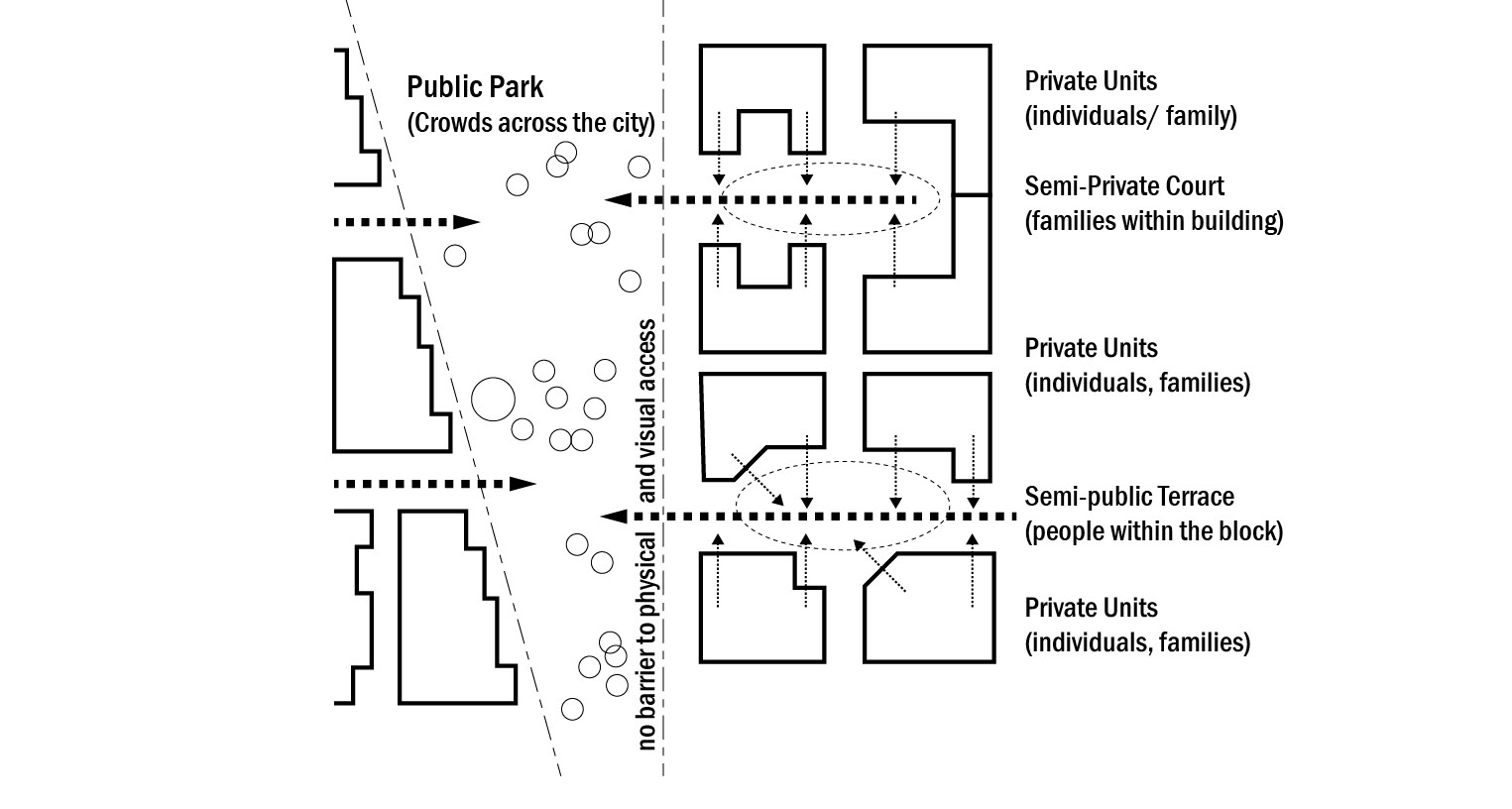
Publicness gradient based on MOVEMENT and GATHERING
03. The Resilience Chain
Complexity
A richness of information. Complexity maintains interest but requires order to avoid chaos.
Diversity
The degree of variation (formal or social) within a unified whole. Diversity allows us to understand relationships through difference.
Choice
The ability to have agency. Alternative choices in mobility, use, and density create flexibility.
Resilience
The ability of an urban system to adapt to change. Resilience is born from the redundancy of choice and diversity.
04. The Meaning Chain
Space
The void between objects. The medium of relationships.
Character
The distinguishing feature that makes one thing different from another. We often project human personality onto urban character.
Identity
The recognition of that character as a specific, named entity.
Place
Space plus Meaning. When a location acquires social value and memory, it becomes a Place.
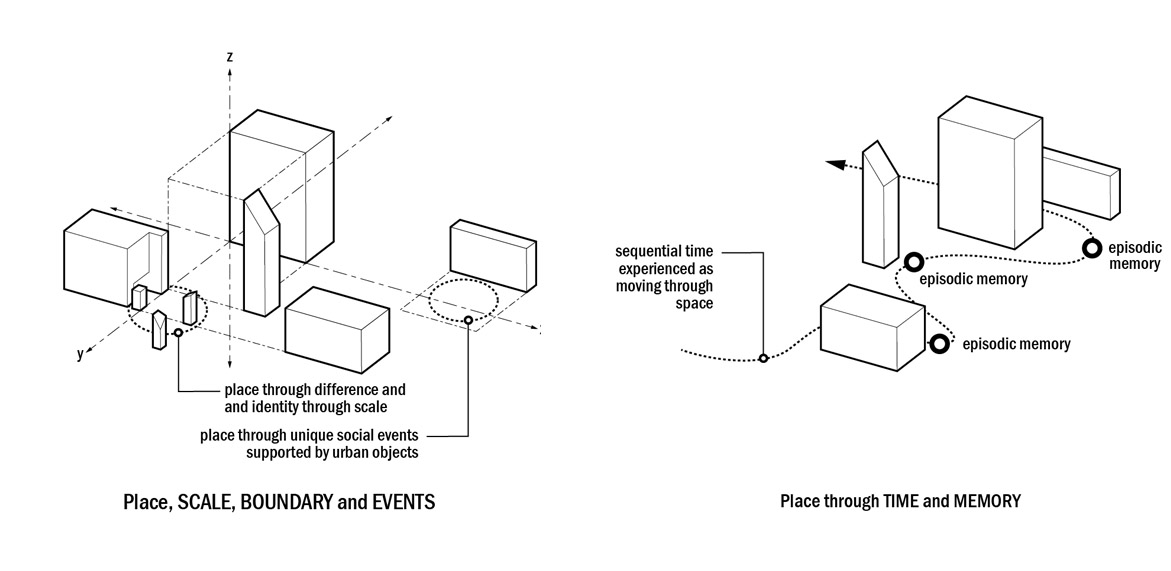
Place through TIME and MEMORY